The Headline Numbers
Google Cloud's first-quarter revenue growth surged to 63%, dramatically outpacing AWS at 28% and Microsoft Azure at 30%. Alphabet's stock rose nearly 10% following the announcement. But the bigger story is what's driving this growth.
The Game Changer
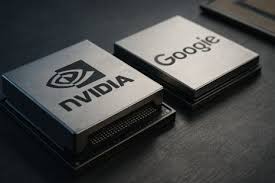
Google has begun selling its self-developed TPU (Tensor Processing Unit) AI chips directly to external customers — not just renting them through Google Cloud. This marks a direct challenge to NVIDIA, which has dominated the AI chip market with an estimated 80-90% share.
What Google Announced
At its Google Cloud Next '26 conference in Las Vegas, attended by approximately 30,000 developers and business leaders, Google unveiled two new eighth-generation TPU chips:
TPU 8t: Designed for large-scale AI model training. It delivers 2.8 times the performance of the previous generation at the same price, potentially shortening model development cycles from months to weeks.
TPU 8i: Optimized for inference tasks (running trained models in production). It achieves an 80% price-performance improvement over the prior generation, allowing businesses to serve nearly twice as many customers at the same cost.
Why This Is a Big Deal
Until now, Google's TPUs were only available to customers using Google Cloud. The new strategy allows enterprises to install TPUs directly in their own data centers. Google CEO Sundar Pichai confirmed that the company will begin delivering TPU chips to "select customers" within the year, though he cautioned that "the vast majority of revenue will materialize in 2028".
The Market Reaction
NVIDIA's stock dropped more than 4% following the news. But analysts caution against overreaction. Forrester's Alvin Nguyen noted: "NVIDIA should be worried, but not panicked." NVIDIA has spent over a decade building an ecosystem — hardware, CUDA software, developer support, and customer training — that competitors cannot easily replicate.
The Ripple Effects
Meta is reportedly considering deploying Google's TPUs in its data centers starting in 2027, a potential multi-billion dollar deal. Amazon is also developing its own Trainium chips for external sale, though on a slightly later timeline. The AI chip market is shifting from "NVIDIA monopoly" to "multi-polar competition".
The Bigger Trend
This challenge to NVIDIA is part of a larger pattern. The four major tech giants are racing to secure their AI infrastructure supply chains. With $725 billion in planned 2026 AI capital expenditures, they cannot afford to rely on a single chip supplier. Google's TPU sales represent both a competitive threat to NVIDIA and a strategic hedge for Google itself.
What's Next
All eyes are on whether Google can successfully transition from selling cloud access to selling hardware — a fundamentally different business requiring enterprise sales, support, and integration capabilities it has not previously needed. As one analyst put it: "Selling products and providing access are completely different businesses"